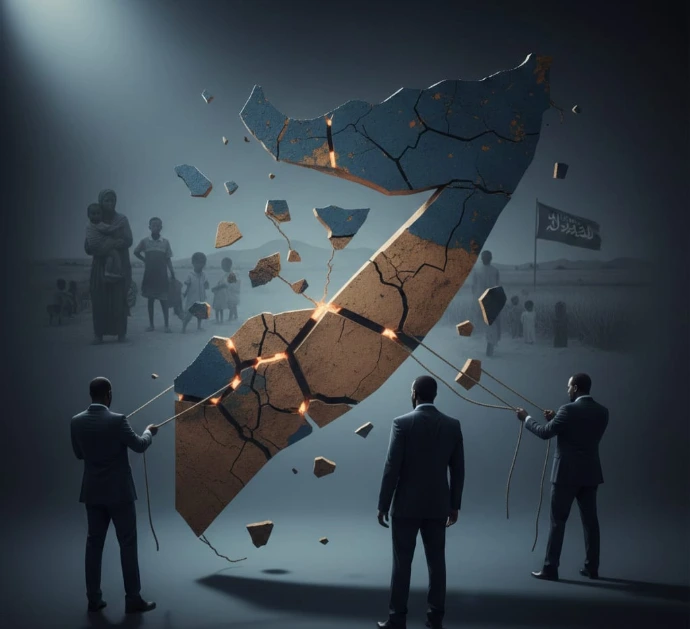
Agenda 2028
Three Priorities for Urgent Action
Fix the Federal System
Move from political bargaining to a rules-based system by fully implementing the constitution and clarifying roles, powers, and accountability.
Reform Security
Transform fragmented and personalized forces into unified, professional institutions under civilian control and the rule of law.
Liberate, Stabilize & Rebuild
Turn security gains into lasting peace by establishing local governance, restoring services, and rebuilding communities.
Most Recent
Latest Stories
Explore fresh ideas and updates from our editorial team.
Jan 15, 2026 - Forward
RELEASE: Priority One: How to fix the broken federal system
Dec 26, 2025 - Forward
The January 20 Deadline
The Kismayo communiqué has established a critical pivot point for Somalia.
Dec 18, 2025 - Forward
Election won't fix Somalia's problems
Oct 16, 2025 - Forward
Immediate Relief while planning reforms
Reform is an ongoing process — deliberate, political, and inherently slow. Yet insecurity and governance gaps demand action today, not years from now.
Sep 28, 2025 - Case for Reform
Rethinking Rules of Engagement
The recent incidents in Mogadishu surrounding the enforcement of public land evictions have raised..
Jul 31, 2025 -Insights
The cost of disunity
A strategic realignment is urgently needed.
Aug 21, 2025 - Explainer
New Policing Model
Jul 11, 2025 - Explainer
National Security Architecture
National Security Architecture (NSA), a political and technical blueprint for
Deep Dive.
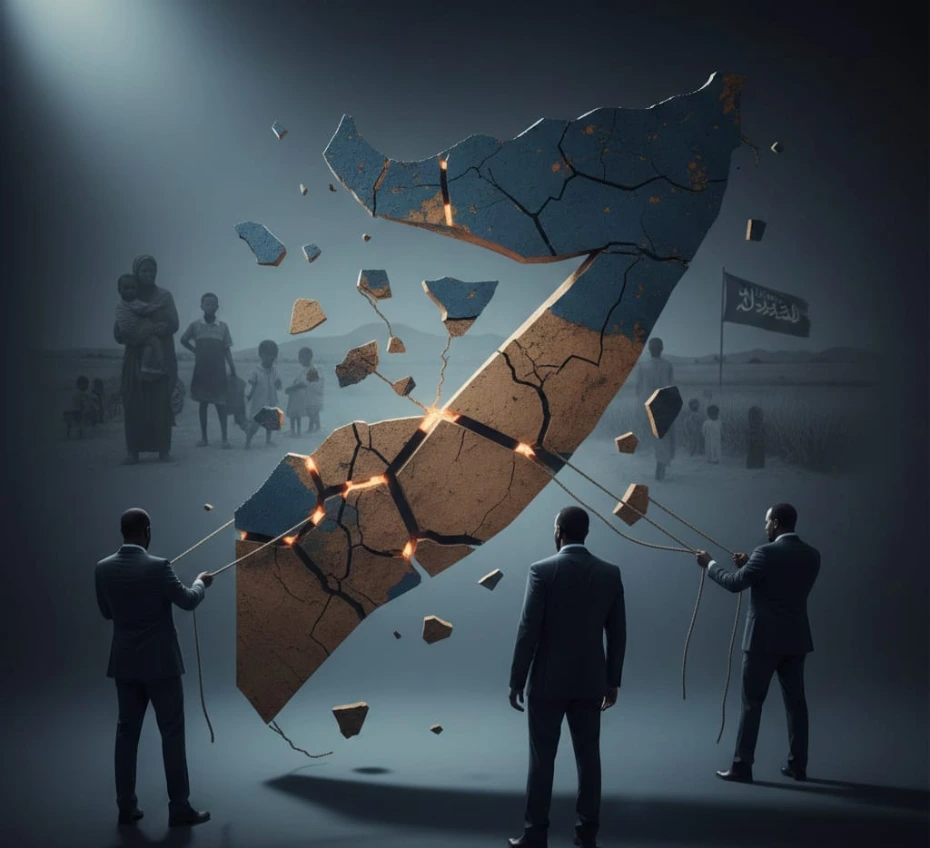
2026 is shaping up to be one of the most volatile political years Somalia has faced in recent times. This is not simply because of elections, but because of a dangerous convergence: a persistent insurgency, growing threats to territorial integrity, deepening climate shocks, and an increasingly contested political transition. Together, these pressures are exposing the fragility of the federal system and raising fundamental questions about the direction of the Somali state.
Reality on The Ground.
The political deadlock is more than just a bureaucratic delay.
It is a man-made crisis. The state remains in a vacuum. In this vacuum, the humanitarian and economic crisis don’t wait. Millions are wondering where their next meal or drop of water will come from.
Without an immediate shift from ego-driven friction to a time-bound electoral roadmap, the country will not just remain in deadlock, it will begin to disintegrate. The public, whose lives and livelihoods are at stake, expects government service and solutions to these crises, not leaders who choose petty political games.